Choosing a metal roof in Los Angeles means balancing performance, aesthetics, and a patchwork of fire-safety rules that matter to inspectors, insurers, and neighbors. Metal performs exceptionally well for fire resistance, but compliance is not automatic. Where your house sits, how the roof assembly is built, and whether local ordinances have additional requirements will determine whether an installation passes muster. If you are looking for a Metal Roofing Contractor Los Angeles homeowners trust, or considering Eclipse Metal Roofing, it pays to understand the rules and practical trade-offs before you sign a contract.
Why the question matters now Wildfires, brush fires, and even roof-top starting points for urban fires have pushed building authorities to treat roofing materials as a frontline defense. Los Angeles enforces statewide building and fire codes with municipal amendments, and insurance companies are increasingly exacting. A metal roof can reduce vulnerability and sometimes lower premiums, but only if installed in a way that satisfies the fire code and the local plan checkers. Installers who know how to present documentation and detail the assembly save weeks of delays and thousands in rework.
How fire codes apply to metal roofing in Los Angeles California follows the California Building Code and California Fire Code, which are based on the International codes but include state amendments. Los Angeles has its own municipal code and local departments that implement these codes at plan review and inspection. Two code ideas show up repeatedly.
First, materials and assemblies are classified by their fire performance, most commonly the roofing assembly’s fire classification labeled Class A, Class B, or Class C. Class A offers the highest resistance to flame spread and burning fuel behavior. Metal roofing products, properly installed over approved underlayment and deck, Metal Roofing in Los Angeles can and often do achieve Class A ratings.
Second, the issue of noncombustible construction and fire spread between assemblies. Even if the exposed roofing material is metal, if the roof assembly includes combustible sheathing or insulation in a configuration that the code views as contributing to fire spread, additional tests or fire barriers may be required. This is why a simple metal panel over a combustible roof deck is not a guaranteed pass in every circumstance. Inspectors look at the whole system.
Common practical triggers for extra scrutiny Certain situations in Los Angeles tend to trigger closer review by plan checkers and fire inspectors. Expect additional attention when one or more of these apply.
Siting near a wildland interface or steep canyon: properties adjacent to brush or graded open space often face stricter requirements to reduce ember entry and ignition. Vents, eaves, and intersections with walls are where embers can catch.
Re-roofing over existing combustible layers: layering multiple existing roofs or leaving combustible materials exposed under the metal can create a concealed space that supports fire spread. Re-roofs sometimes require removal of existing layers down to the deck.
Accessory structures and high occupancy or mixed-use buildings: commercial occupancies and buildings with special uses may require tested assemblies and specific fire performance documentation.
Parapets, foam insulation, or combustible underlayments used in the assembly: where foam plastic insulation or combustible toppings are present, the code may require noncombustible barriers or tested alternatives.
Documentation and testing requests: plan checkers may ask for an ASTM or UL listing for the specific assembly, or for test data such as NFPA 285 if the roof-wall interface involves combustible materials and vertical fire spread is a concern.
What inspectors look for on a site visit Inspectors are practical; they want to see the installation match what the approved documents describe. In my experience working alongside roofers and project managers, these items resolve the most re-inspections and punch-list issues:
Proper labeling and product data on site. A binder or digital folder with the manufacturer’s technical data and the UL or ASTM classification for the exact profile and finish avoids surprises.
Underlayment selection and attachment. Not all underlayments are equal in fire tests. The inspector will check that the underlayment cited in the plan review is the one installed, and that fasteners and terminations match details.
Flashing, gutters, and roof penetrations. These are common points of failure for both fire and water. Metal flashing must be properly laced into eaves, valleys, and wall intersections to prevent gaps that embers or hot gases could exploit.
Eave and soffit protection. If the assembly leaves exposed gaps at eaves or soffits, the inspector may require screening, baffles, or noncombustible closure strips.
Vent protection and attic separation. Vents must be screened and detailed so embers cannot enter the attic. On some projects, an approved ember-resistant vent product is necessary.
How metal roofing products get qualified Manufacturers submit assemblies to testing agencies like Underwriters Laboratories for fire classification. A Class A rating is not given to the metal panel alone but to the combination of roofing surface, underlayment, fasteners, and deck. Where the manufacturer carries a full assembly listing, an installer can present the UL listing as part of the permit application. If the exact assembly is not listed, the local authority may require either plan approval based on comparable assemblies or supplemental testing. Experienced Metal Roofing Contractor Los Angeles teams know how to compile and present this evidence.
Material choices and trade-offs Steel, aluminum, copper, and zinc all behave differently in the field even if their basic incombustibility is the same. Steel is strong, economical, and takes paint systems well. Aluminum resists corrosion in coastal exposures. Copper and zinc age to attractive patinas and require fewer seams over large expanses, which can reduce ember entry points.
Trade-offs emerge around substrate and flashing choices. Standing seam panels over a plywood deck with a Class A underlayment present one simple path. Using foam insulation or nail-base panels may improve thermal performance but change the fire profile and create a need for additional barriers or tested assemblies. Similarly, lightweight metal shingles that mimic asphalt may have different clip and fastener systems that impact the tested assembly.
An example: a canyon-facing home in the Hollywood Hills A client I worked with had an older Spanish tile roof above a 1920s wood deck. Because of repeated breakage and poor attic ventilation, they chose a metal standing seam roof in a low-gloss finish for reduced solar gain and improved durability. The first plan check flagged the fact that the existing deck was historic wood sheathing with an insulating layer beneath it. The initial installer proposed to lay metal directly over the existing sheathing, arguing that metal is noncombustible. The plan check rejected that approach, citing the need to either remove combustible layers or submit a tested assembly. We revised the scope to remove the old sheathing to the deck, installed a code-approved underlayment and a ventilation strategy, and provided the UL installation sheet for the chosen assembly. The revised submission cleared the plan check, and final inspection passed. The change added about 8 percent to the project cost but avoided a months-long back-and-forth that would have delayed permit finalization.
Permits, paperwork, and the path to compliant installation Start the permit process with the building department early. In Los Angeles, the process can be iterative and local conditions matter. Bring product data sheets, a schematic drawing that shows how the roof terminates at hips, ridges, walls, and parapets, and an assembly listing that matches the installed materials. If you plan to keep existing roof layers, disclose that at plan check. A common source of delays is a mismatch between what the paperwork shows and what the crew installs.
Licensing and contractor responsibility is another area where experience matters. A licensed Metal Roofing Contractor Los Angeles will understand local requirements and help coordinate with the structural engineer if additional framing tie-ins or retrofit attachments are needed. It is often worth paying for contractor expertise because rework after inspection failures is expensive.
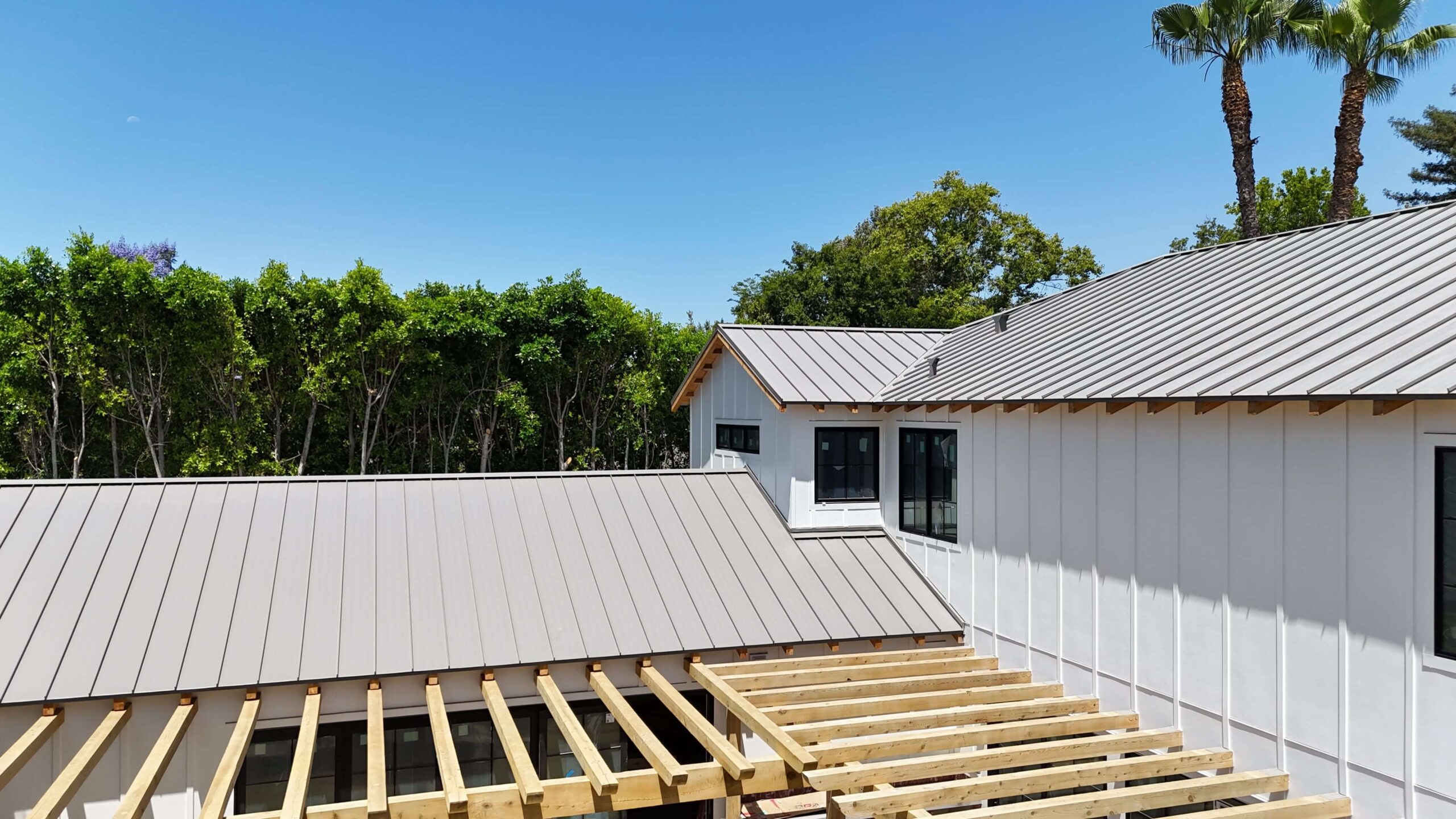
How insurance and homeowners associations view metal roofs Insurance companies look at fire exposure and replacement cost. A metal roof with a Class A assembly can be a positive factor when underwriting wildfire-exposed properties, but insurers will still inspect the entire roof assembly, flashing, and clearances. HOAs vary widely. Some architectural committees prefer the look of tile or shingle and may require color and profile approvals; others actively encourage metal for its longevity.
If your property is in a historic district, additional permissions may be required before changing roofing materials. In some districts, a standing seam in a low-profile finish is acceptable because it preserves massing and shadow lines; in others, simulated tile profiles that mimic the historic roof are demanded. Work with both your Metal Roofing Contractor Los Angeles and the HOA early to avoid redesigns.
Performance beyond fire resistance Metal roofing brings several performance benefits that tie directly to decision-making for compliance. Metal sheds embers and radiant heat better than many combustible materials. It is lighter than concrete tile, reducing the need for structural reinforcement on older homes. It lasts 40 years or more with proper maintenance, and some manufacturers provide 30-year finish warranties. These factors affect life-cycle costs and can help justify the higher upfront price of a quality metal roof.
Yet the best metal roof still needs careful detailing. Undersized fasteners, poor sealant choices, or improper flashings lead to leaks that water the attic and create rot, which undermines noncombustible assumptions. I have seen otherwise excellent metal roofs fail because the weep holes at a transition were blocked, or the wall counterflashing was not set properly. Fire performance and weather performance are linked through quality of execution.
Checklist for achieving compliance and a faster approval (five items)
Gather product documentation and UL or ASTM listings for the exact panel profile, underlayment, and fastener system you will install, and submit them with the permit application. Identify any combustible layers or foam insulation in the existing assembly and either remove them or propose a tested assembly with supporting data. Detail eave, soffit, vent, and wall intersection treatments so plan checkers can see ember-resistant measures and attic separation. Use a licensed Metal Roofing Contractor Los Angeles with proven local experience and a track record of passing LA plan review. Coordinate HOA, historic preservation, and insurance notifications early to capture requirements that affect materials and finishes.Common edge cases and how to resolve them If you are replacing a roof on a multi-unit building with vertical parapet walls, the interaction between the roof and the wall can require fire-rated continuous barriers. In retrofit situations where foam board insulation is used for energy upgrades, local code officials often ask for noncombustible barrier layers above or below the foam, or for assemblies with tested performance. When venting is restricted by design, use listed ember-resistant vents and document the manufacturer’s test data.
There are also examples where a metal roof appears to be a simple retrofit but triggers structural concerns. Some hip and ridge retrofits require changing clips and fasteners that attach to battens or purlins. If the roof deck changes from heavy tile to lightweight metal, the lower dead load can expose inadequate lateral connections in older framing during high winds. A competent contractor will flag these structural interactions and involve a structural engineer upfront.
Working with Eclipse Metal Roofing and choosing a contractor A brand name alone does not guarantee a smooth permit process, but choosing a supplier or contractor with local experience reduces the typical negotiation friction. Eclipse Metal Roofing products and teams that understand Los Angeles municipal requirements will bring the right listings and installation guides to the plan check. Ask your contractor for examples of passed inspections on similar properties, and request references you can call.
When interviewing contractors, ask for the following specifics rather than general assurances. What exact panel profile and finish will be used, and can you see the UL or ASTM listing for the complete assembly? If existing decking or insulation remains, how will they mitigate combustible layers? Which ventilation products and vent guards will they install? Will their price include removal of existing layers if required, or will that be a change order? The difference between a contractor who has been through LA plan check repeatedly and one who has not often shows up as a week of delay and an unexpected invoice.
Cost implications and realistic timelines Expect that permitting in Los Angeles can add two to eight weeks depending on complexity and whether plan checkers request additional documentation. Historic or canyon-facing properties are often at the longer end. Removing existing roof layers to achieve a compliant assembly will add material and labor costs; in many cases that is 5 percent to 15 percent of the overall budget, depending on tear-off complexity and disposal fees. A roof replacement done right avoids costly callbacks, failed inspections, and insurer disputes that can be far more expensive over time.
Final thoughts on risk, performance, and choices Metal roofing presents one of the more resilient options for Los Angeles homeowners who need fire resistance, durability, and long-term value. The technical facts are straightforward: metal itself is noncombustible and a metal roof can achieve a Class A assembly, but the path to code compliance is about the assembly, not just the visible surface. When you choose a Metal Roofing Contractor Los Angeles or a branded installer like Eclipse Metal Roofing, prioritize documented assemblies, clear drawings, and experience with local plan checkers. That approach protects your property, helps secure your insurance position, and saves time and money on the project.
If your next step is to get bids, bring the documentation and the checklist to initial meetings, and choose a contractor who can answer the technical Visit this page questions about assemblies and provide past examples of successful LA permits. A signed contract with clear scope for tear-off, disposal, underlayment, flashing details, and final inspection support is the most reliable way to move from concept to a compliant, long-lasting roof.
Eclipse Metal Roofing
2140 Westwood Blvd Unit 209, Los Angeles, CA 90025
+1 (310) 490- 9695
[email protected]
Website: https://eclipsemetalroofing.com